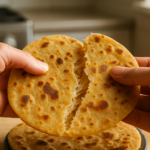
Vegan Soft Layered Carrot Chapati Recipe: Stop The Bloat
A soft, layered carrot chapati made with whole wheat flour and gentle spices. This vegan flatbread is light, comforting, and easy on digestion.
Servings: 4 people 6-8 Chapatis
Equipment
- 1 Large mixing bowl
- 1 Box grater for carrots
- 1 Rolling Pin
- 1 Skillet or tawa
- 1 Clean kitchen towel for resting & covering chapatis
Ingredients
- 1 Cup Carrots, finely grated and lightly squeezed packed
- 1 1/2 Cups Whole wheat flour atta
- 2 Tbsp Finely ground oats Or oat flour
- 1 Tbsp Fresh Ginger finely grated
- 1/2 Tsp Salt
- 1/2 Tsp Ground cumin
- 1 Tbsp Fresh Ginger finely grated
- 1/4 Tsp Turmeric
- 1/2 Tsp Crushed fennel seeds Saunf
- 1 Tbsp+ Neutral oil + Add more oil for layering (avocado, sunflower, or olive)
- 1/2 Cup Warm water 1/2 Cup- 3/4 Cup As Needed
- Extra flour for rolling As needed
Instructions
Prepare the Carrot
Finely grate the carrot. Gently squeeze out excess moisture so it is damp but not dripping. Set aside.Prepare the Dry Base
In a large bowl, whisk together the whole wheat flour (atta), oat flour, salt, ground cumin, turmeric, and crushed fennel seeds until well combined.Form the Dough
Add the grated carrot and 1 tablespoon of oil to the flour mixture. Rub everything together briefly with your fingers. Gradually add warm water, mixing as you go, until a soft, slightly tacky (not sticky) dough forms.Knead the Dough
Lightly knead the dough for 5–6 minutes until smooth and pliable. The dough should feel soft and elastic, not stiff.Rest the Dough
Cover the dough with a clean cloth or bowl and let it rest for 20–30 minutes. This relaxes the dough and makes rolling easier.Divide the Dough
Divide the rested dough into 6–8 equal portions.Roll each portion into a smooth ball.Create the Layers
Roll one dough ball into a thin circle. Lightly brush the surface with oil and sprinkle a small pinch of flour. Roll the dough into a loose log, then coil it into a spiral. Gently flatten the spiral with your palm.Roll the Chapati
Using light pressure, roll the spiral into a medium-thin round. IMPORTANT: DO NOT OVER ROLL!The layers should remain visible around the edges.Cook the Chapati
Heat a skillet or tawa over medium heat. Place the rolled chapati onto the hot pan and cook for 30–40 seconds until bubbles form. Flip and cook the second side for another 30–40 seconds, until golden spots appear. Lightly brush with oil while cooking, if desired.Rest and Repeat
Remove the cooked chapati from the pan and cover with a clean cloth to keep soft. Repeat with the remaining dough portions.
Notes
• Carrot moisture matters
The carrot should be damp, not wet. If it’s dripping, the dough will turn sticky and require excess flour, which makes chapati dense instead of soft. • Dough texture is more important than water amount
Humidity, carrot size, and flour type all affect hydration. Stop adding water as soon as the dough feels soft and slightly tacky. • Resting is not optional
Skipping the rest will make rolling harder and the chapati tougher. Resting allows the dough to relax and creates better layers. • Roll gently to protect the layers
Press lightly when rolling the final chapati. Over rolling will flatten the layers and reduce flakiness. • Keep cooked chapatis covered
Stack cooked chapatis and cover with a clean cloth to trap steam and maintain softness. Storage tip:
Leftover chapatis keep well wrapped in the fridge for up to 2 days and reheat best on a dry skillet.
The carrot should be damp, not wet. If it’s dripping, the dough will turn sticky and require excess flour, which makes chapati dense instead of soft. • Dough texture is more important than water amount
Humidity, carrot size, and flour type all affect hydration. Stop adding water as soon as the dough feels soft and slightly tacky. • Resting is not optional
Skipping the rest will make rolling harder and the chapati tougher. Resting allows the dough to relax and creates better layers. • Roll gently to protect the layers
Press lightly when rolling the final chapati. Over rolling will flatten the layers and reduce flakiness. • Keep cooked chapatis covered
Stack cooked chapatis and cover with a clean cloth to trap steam and maintain softness. Storage tip:
Leftover chapatis keep well wrapped in the fridge for up to 2 days and reheat best on a dry skillet.
