
Vegan Soft Layered Carrot Chapati Recipe: Stop The Bloat
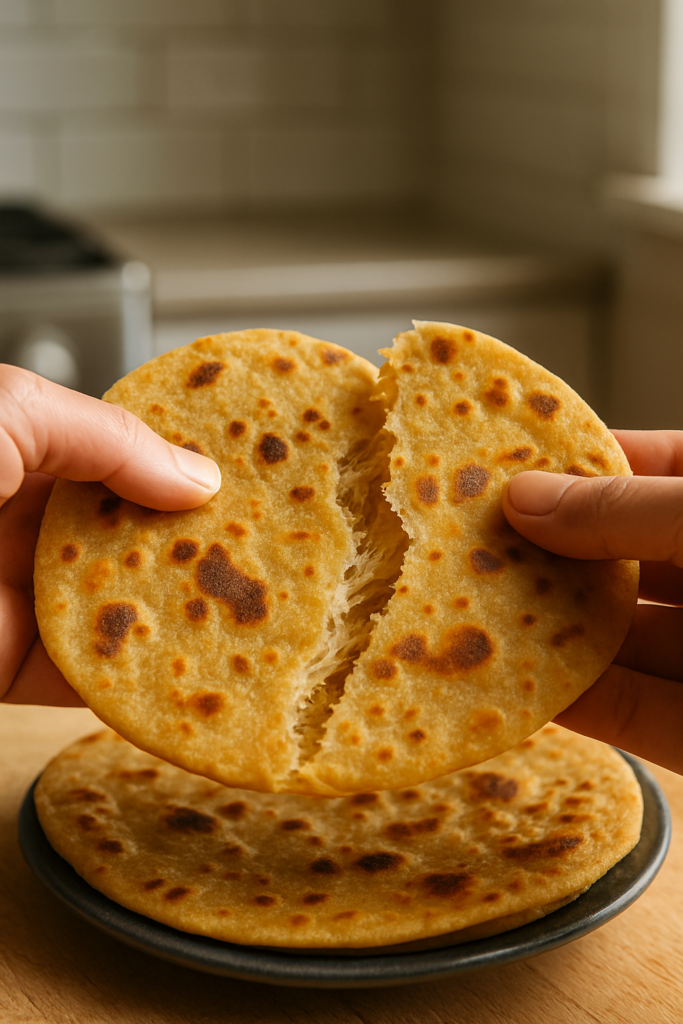
This soft, layered, carrot chapati recipe is one of the most unique, and delicious vegan recipes. This recipe shows you how to do it the right way, and have it come out nice and soft, unlike most flatbreads.
If you’re like me, you love flatbreads with their soft texture, and the comforting warmth they bring. However, sometimes, they leave you feeling heavy, sluggish, or totally bloated.
Traditional recipes use oils or heavy flours that work against a sensitive gut, making them anything except part of a stomach friendly meals group. However, the secret to a perfectly light, delicious, and deeply satisfying flatbread is simple, and involves sneaking in one of the most anti inflammatory root vegetables around.
This soft and layered carrot chapati recipe is light, subtly sweet, and it’s designed to make your tummy happy. Thanks to a few clever ingredients like fresh ginger and fennel, you get the comfort food, without the bloating. It doesn’t have the heavy feeling of dense bread. This recipe is airy, high in fiber, and the perfect vegan flatbread to accompany any meal.
Let’s dive into the two secrets that make this recipe a unique game changer that makes it all worth it.
The Biggest Hurdle: Learning How to Make Chapati Without the Bloat
When most people learn how to make chapati, they focus on speed and simplicity. They often overlook the ingredients that matter most for digestion.
This recipe’s approach is different. We keep the traditional East African technique but swap out problematic fats and flours for better, gut friendly options.
The magic starts with the oats and spices in the dough. The finely ground oats provide a gentle, soluble fiber that aids in digestion, while the crushed fennel and ginger are gentle on your stomach.
They actively work to reduce gas and bloating. This combination ensures that this vegan flatbread is not only delicious, but it genuinely makes you feel good from the inside out.
Quick Tip: Upgrade Your Flour
For the very best results that are easier on the gut, seek out stone ground, whole wheat atta flour. It’s not only finer, but it integrates better with the carrot and moisture.
The Secret to Perfection: Mastering the Layered Chapati Recipe
A great chapati should be light, flaky, and soft, not tough like cardboard. The secret to achieving that coveted texture is the layered chapati recipe technique, which also makes the final product surprisingly light. This is also key for having stomach friendly meals.
The layered method involves rolling, oiling, and coiling the dough (like a snail shell) before the final roll. This creates internal steam pockets that puff up beautifully on the pan.
The result makes it fluffier, and more tender that’s easier to chew, and much easier for your body to break down and digest.
A true layered chapati recipe is about creating a subtle separation inside the bread so it bends instead of breaks. When it’s done properly, layers trap steam, retain softness, and prevent that dry, crumbly texture people associate with the so called “healthy” flatbreads.
This carrot based dough responds especially well to layering. The moisture helps define those layers without tearing, which is why this version rolls more easily than most whole wheat chapati doughs.
This is a small technique shift with a big payoff.
This carrot chapati recipe is proof that you never have to choose between food that tastes incredible, and food that makes you feel amazing.
This carrot based, layered approach was created to make chapati feel good to eat again.
By mastering this simple, layered chapati recipe technique, you can enjoy the most satisfying flatbread while giving your gut the high fiber, anti inflammatory support it craves.
Why Traditional Chapati Often Feels Heavy (Even When You Follow the Recipe)
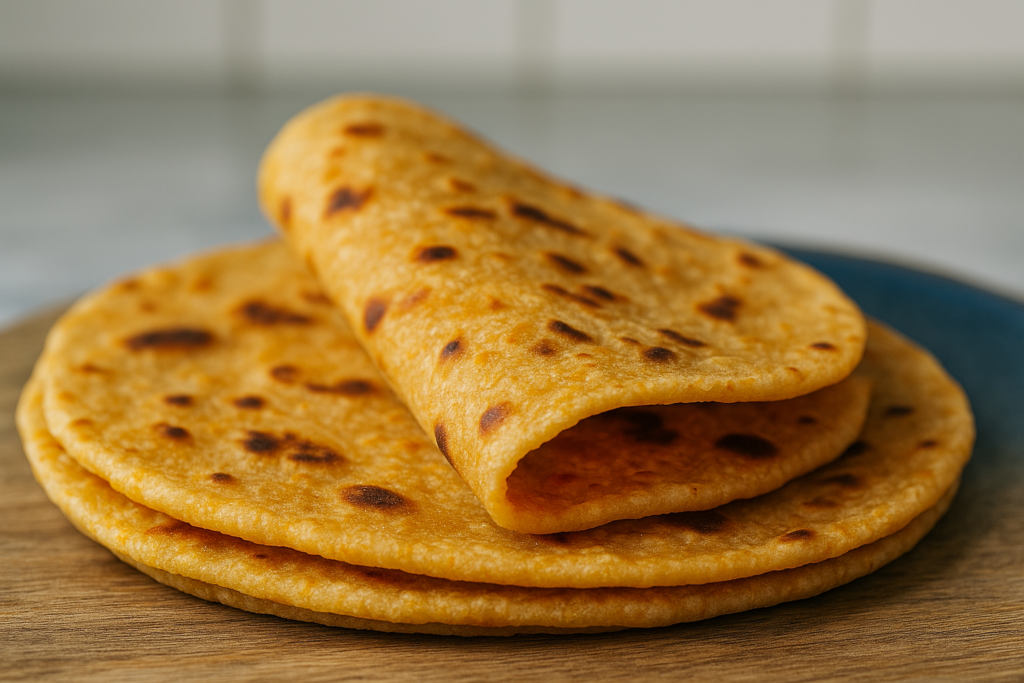
The part that most recipes skip is that chapati is about hydration, softness, and structure working together.
Many classic methods assume there is:
- strong gluten.
- aggressive rolling.
- and a tolerance for dense bread.
However, for people seeking stomach friendly meals, that approach doesn’t always land well.
Adding finely grated carrot changes the internal structure of the dough. It introduces moisture and softness without relying on extra oil or refined flour. The result is simply more forgiving.
That’s the difference you feel before you even take a bite.
Still a Vegan Flatbread, But Better
A lot of vegan flatbread recipes feel like compromises. Something is removed, or something else is forced in, and the texture is never quite right.
This carrot chapati recipe doesn’t work that way.
Nothing is missing or pretending to be something else. The dough rolls cleanly, cooks evenly, and stays soft long after it comes off the pan. It behaves like chapati should, just with better results.
That’s why people who don’t normally seek out vegan recipes still come back to this one.
Why This Fits So Naturally Into Stomach Friendly Meals
Comfort food doesn’t have to be heavy to feel satisfying.
This carrot chapati recipe works so well for people seeking stomach friendly meals because it respects digestion without turning a meal into an experiment. There are no extreme fibers, no binders that swell unpredictably, and no textures that feel harsh once they’re cooked.
Instead, it relies on:
- softness over density.
- balance over restriction.
- technique over additives.
That’s why it’s the kind of recipe people quietly build it into their normal, everyday routine.
Ingredients To Make Soft Layered Carrot Chapati (For Vegan & Stomach Friendly Meals):
- 1 cup finely grated carrot lightly squeezed
- 1½ cups whole wheat flour (atta)
- 2 tablespoons finely ground oats (or oat flour)
- ½ teaspoon salt
- ½ teaspoon ground cumin
- ¼ teaspoon turmeric
- ½ teaspoon crushed fennel seeds
- 1 tablespoon neutral oil (avocado, sunflower, or olive)
- ½ to ¾ cup warm water (as needed)
- Extra flour for rolling
- A little oil for layering and cooking
Instructions To Make Soft Layered Carrot Chapati (For Vegan And Stomach Friendly Meals)
- Prepare the carrot by finely grating it.
- After grating the carrot, gently squeeze out excess moisture so it’s damp but not dripping.
- Set aside.
- Mix the dry ingredients In a large bowl, combine the whole wheat flour, oat flour, salt, cumin, turmeric, and crushed fennel seeds.
- Mix well.
- Form the dough
- Add the grated carrot and 1 tablespoon oil to the bowl.
- Gradually add warm water while mixing with your fingers until a soft, slightly tacky dough forms.
- Lightly Knead for 5–6 minutes until smooth and pliable. The dough should be soft, not stiff.
- Cover and let the dough rest for 20–30 minutes. This step is essential for softness and easier rolling.
- Create the layers, and divide the dough into 6–8 equal portions. Roll one portion into a thin circle.
- Lightly brush with oil and sprinkle a pinch of flour.
- Roll into a loose log, coil into a spiral, then gently flatten.
- Roll the chapati Using light pressure, roll the spiral into a medium thin round.
- IMPORTANT: Do not over roll!
- The layers should remain visible.
- Heat a skillet or tawa over medium heat.
- Cook the chapati for 30–40 seconds per side until bubbles form and golden spots appear.
- Lightly brush with oil while cooking if desired.
- Rest & repeat
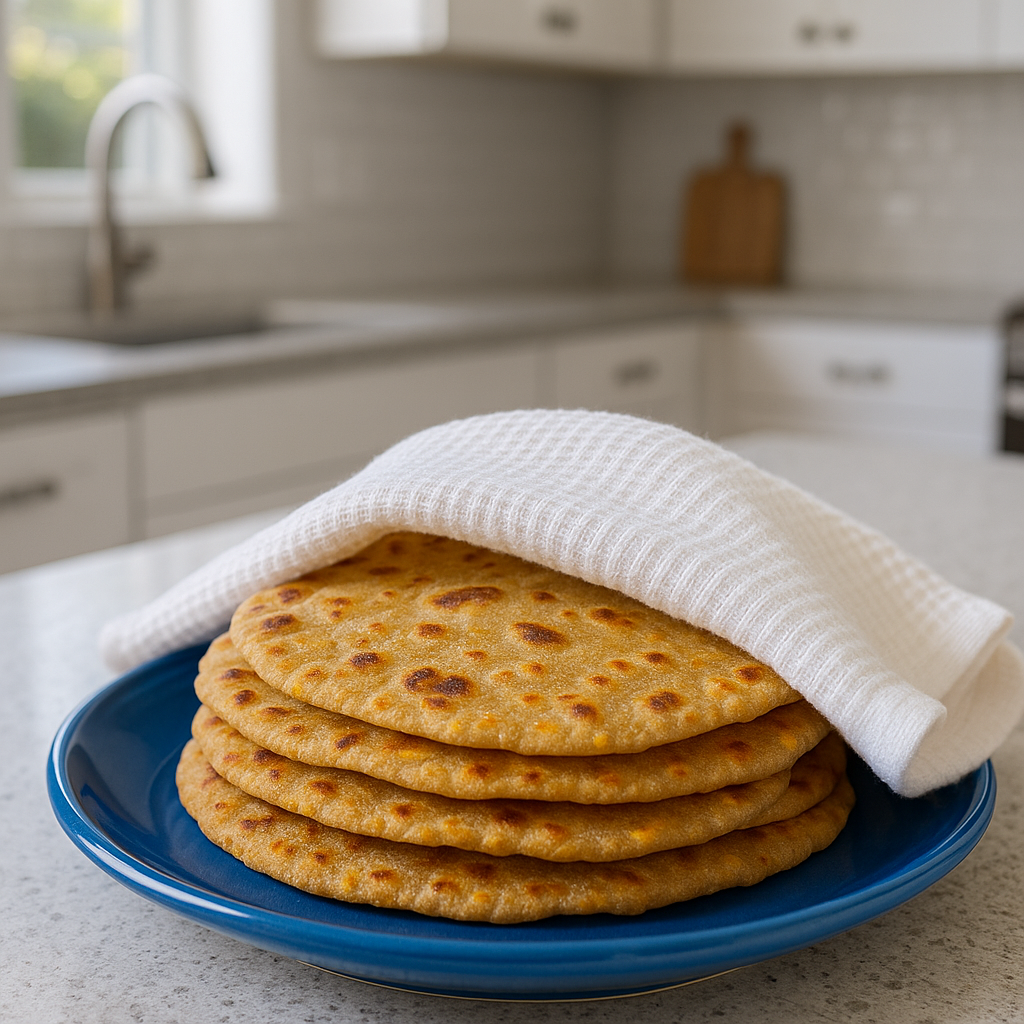
- Remove from the pan and cover with a clean cloth.
- Repeat with remaining dough.
- Makes 6–8 soft, deliciously layered carrot chapatis
In Conclusion: This Carrot Chapati Recipe Is Optimal To Make When you want:
- a vegan flatbread that feels comforting, not heavy.
- something homemade that doesn’t require constant troubleshooting.
- a reliable base for simple meals without digestive regret.
It goes well naturally with lentils, vegetables, or even on its own. Also, because it reheats well, it fits easily into everyday cooking, and not just special occasions.
If you enjoyed this recipe, be sure to also try our Low FODMAP Vegetarian Recipe Plan That includes a Free Gut Reset Guide
Vegan Soft Layered Carrot Chapati Recipe: Stop The Bloat
Equipment
- 1 Large mixing bowl
- 1 Box grater for carrots
- 1 Rolling Pin
- 1 Skillet or tawa
- 1 Clean kitchen towel for resting & covering chapatis
Ingredients
- 1 Cup Carrots, finely grated and lightly squeezed packed
- 1 1/2 Cups Whole wheat flour atta
- 2 Tbsp Finely ground oats Or oat flour
- 1 Tbsp Fresh Ginger finely grated
- 1/2 Tsp Salt
- 1/2 Tsp Ground cumin
- 1 Tbsp Fresh Ginger finely grated
- 1/4 Tsp Turmeric
- 1/2 Tsp Crushed fennel seeds Saunf
- 1 Tbsp+ Neutral oil + Add more oil for layering (avocado, sunflower, or olive)
- 1/2 Cup Warm water 1/2 Cup- 3/4 Cup As Needed
- Extra flour for rolling As needed
Instructions
Prepare the Carrot
Finely grate the carrot. Gently squeeze out excess moisture so it is damp but not dripping. Set aside.Prepare the Dry Base
In a large bowl, whisk together the whole wheat flour (atta), oat flour, salt, ground cumin, turmeric, and crushed fennel seeds until well combined.Form the Dough
Add the grated carrot and 1 tablespoon of oil to the flour mixture. Rub everything together briefly with your fingers. Gradually add warm water, mixing as you go, until a soft, slightly tacky (not sticky) dough forms.Knead the Dough
Lightly knead the dough for 5–6 minutes until smooth and pliable. The dough should feel soft and elastic, not stiff.Rest the Dough
Cover the dough with a clean cloth or bowl and let it rest for 20–30 minutes. This relaxes the dough and makes rolling easier.Divide the Dough
Divide the rested dough into 6–8 equal portions.Roll each portion into a smooth ball.Create the Layers
Roll one dough ball into a thin circle. Lightly brush the surface with oil and sprinkle a small pinch of flour. Roll the dough into a loose log, then coil it into a spiral. Gently flatten the spiral with your palm.Roll the Chapati
Using light pressure, roll the spiral into a medium-thin round. IMPORTANT: DO NOT OVER ROLL!The layers should remain visible around the edges.Cook the Chapati
Heat a skillet or tawa over medium heat. Place the rolled chapati onto the hot pan and cook for 30–40 seconds until bubbles form. Flip and cook the second side for another 30–40 seconds, until golden spots appear. Lightly brush with oil while cooking, if desired.Rest and Repeat
Remove the cooked chapati from the pan and cover with a clean cloth to keep soft. Repeat with the remaining dough portions.
Notes
The carrot should be damp, not wet. If it’s dripping, the dough will turn sticky and require excess flour, which makes chapati dense instead of soft. • Dough texture is more important than water amount
Humidity, carrot size, and flour type all affect hydration. Stop adding water as soon as the dough feels soft and slightly tacky. • Resting is not optional
Skipping the rest will make rolling harder and the chapati tougher. Resting allows the dough to relax and creates better layers. • Roll gently to protect the layers
Press lightly when rolling the final chapati. Over rolling will flatten the layers and reduce flakiness. • Keep cooked chapatis covered
Stack cooked chapatis and cover with a clean cloth to trap steam and maintain softness. Storage tip:
Leftover chapatis keep well wrapped in the fridge for up to 2 days and reheat best on a dry skillet.